
A network map is only the opening offer
A 3PL may propose one receiving location today and a different outbound warehouse later. That flexibility can be useful. It can also change the arrangement your team evaluated: where orders originate, which stock is available and who pays to reposition it.
Before signing, ask for the relocation process alongside the warehouse list. The important decision is how a proposed move becomes an approved operating change. A notification after the truck leaves gives a brand very little room to protect an upcoming promotion.
Separate the physical move from the routing change
Shopify documents that order routing applies configured rules in sequence to assign orders to fulfillment locations. Its default strategy considers split fulfillments, the destination market and proximity. That is a documented platform behavior, not proof that a particular 3PL's network move will update every connected system correctly. Shopify order routing.
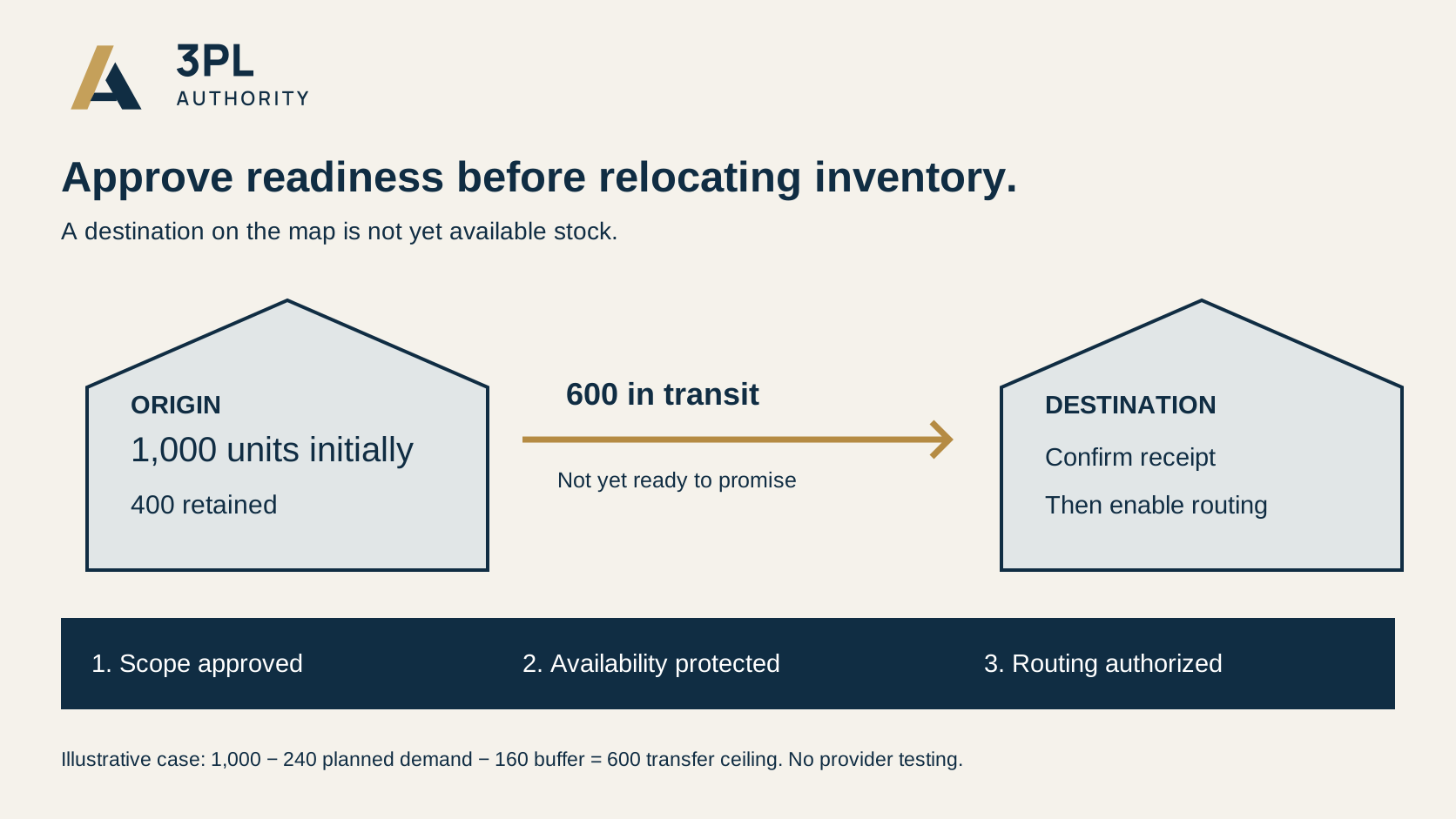
Build three approval gates. First, approve the destination and commercial scope. Second, approve the quantities that can temporarily leave available stock. Third, approve the point at which the destination can receive orders. These gates can happen at different times; naming them prevents an inventory upload from silently becoming launch approval.
Work the availability problem before the freight problem
Consider this original illustrative case, not an observed provider transfer. A brand has 1,000 sellable units at its existing warehouse. Its planning allowance for orders before the destination becomes ready is 240 units, and it wants another 160 units available as a buffer. Nothing replenishes the origin during that interval.
The transfer ceiling is 1,000 minus 240 minus 160: 600 units. A proposed 700-unit move leaves 300 behind, which is 100 short of the brand's combined allowance. The destination may look attractive on a delivery map while the transfer quantity still fails the availability gate.
Now extend the readiness interval. If forecast consumption during that interval rises to 360 units, the ceiling falls to 480. This is why the approval should specify a readiness assumption, not just a truck departure date. Neither number is an industry buffer recommendation. Replace both demand and buffer with your own assumptions and show their owners.
Put the proposal into one decision record
Request a short record containing the origin, destination operator, affected SKUs and lots, quantities, estimated unavailable interval, transfer charges and receiving charges. Add the proposed routing change, the evidence required for sellable receipt and the person who can authorize a reversal.
Ask how shortages discovered at destination will be reconciled with origin dispatch. Agree whether the brand can see inventory while it is in transit without treating it as stock that can ship. Those are acceptance criteria to negotiate; this article does not establish what your existing contract permits.
An emergency needs a separate path. Identify who may authorize protective movement when the original site becomes unusable, how the brand will be contacted and when a full reconciliation follows. A practical emergency path should still leave an accountable decision trail.
Choose flexibility you can govern
Use the same relocation scenario with each shortlisted provider. Ask for a walkthrough of the records and decisions, not a promise that moving stock is routine. Compare the response against your promotion calendar and the people you actually have available to approve changes.
Our desk exercise has two demand cases and no provider sample. Its conclusion is limited but useful: a network move can be acceptable geographically and still fail an inventory-availability constraint. Resolve that constraint before the first pallet is dispatched.
Related reading
Sources
- Shopify Help Center: Order routing — accessed November 6, 2026.